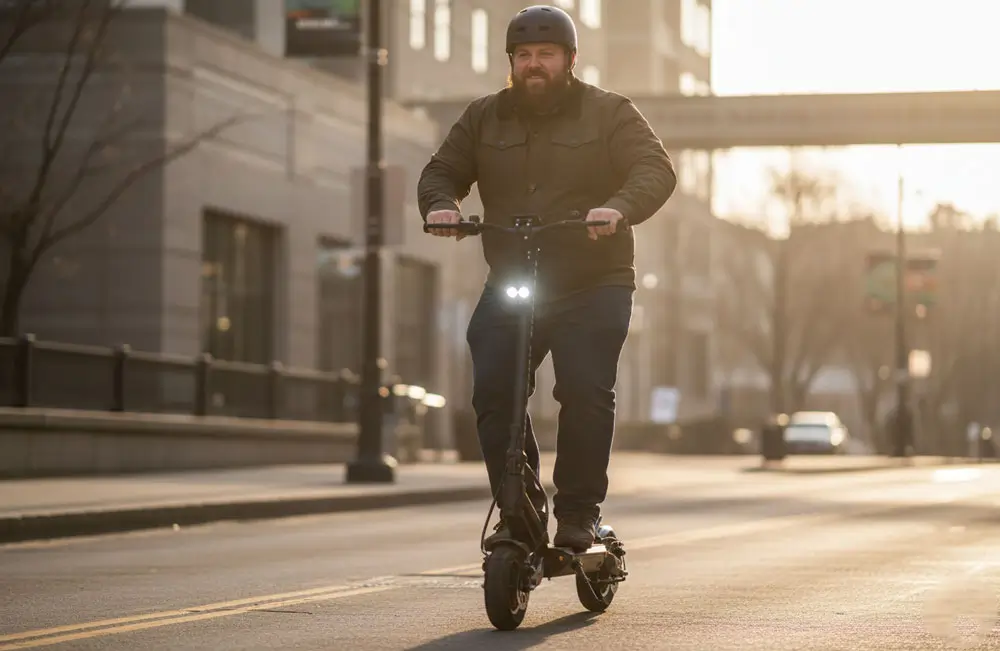
1. Introduction: What Defines a “High-Power” Electric Scooter?
Forget the basic kick scooters you see on city streets. A high-power electric scooter is a different beast entirely. It’s an elite class of e-scooters designed for serious performance, thrilling speeds, and conquering terrain that would make other scooters hesitate.
But what exactly makes a scooter “high-power”? It’s more than just a marketing term. These scooters are built with superior components to handle demanding tasks, whether it’s climbing steep hills, hitting exhilarating speeds on open roads, or carrying a heavier rider with ease.
This complete guide will break down the core technology, performance metrics, and essential safety features of high-power scooters. We’ll help you understand what to look for and how to choose the right model, ensuring you get a machine that truly delivers on its promise.
2. The Core Technology: The Secret to True Power
The secret to a scooter’s power lies in the synergy of its core components. It’s not just about one spec; it’s about how they all work together.
Motor Wattage (The Muscle)
This is the most direct indicator of power. You’ll often see two numbers: Nominal Wattage (sustained power output) and Peak Wattage (maximum power output for short bursts).
- Commuter Scooters: Typically have a nominal motor wattage of 350W to 500W.
- High-Power Scooters: Start at 1000W nominal and can go up to 2000W, 4000W, or even 8000W+ peak. More wattage means better acceleration, higher top speed, and effortless hill-climbing.
Voltage (The Fuel Line)
Think of voltage (V) as the “pressure” that pushes power from the battery to the motor. A higher voltage system is crucial for achieving high speeds and efficiency. A recent study by the U.S. Department of Energy underscores how higher-voltage systems in electric vehicles—including scooters—can lead to improved efficiency and reduced power loss.
- Commuter Scooters: Generally operate on a 36V or 48V system.
- High-Power Scooters: Utilize 60V, 72V, or even 84V systems. A 72V system, for example, allows the scooter to draw more power from the motor, resulting in blistering acceleration and higher top speeds without generating as much heat.
The Controller (The Brain)
The controller is a sophisticated electronic unit that manages the flow of power from the battery to the motor. It dictates how the scooter accelerates and performs. A cheap, low-amp controller can bottleneck even a powerful motor. High-end scooters use advanced controllers that can handle a massive current, unlocking the motor’s full potential for a seamless, powerful ride.
The Battery (The Reservoir)
The battery’s capacity is measured in amp-hours (Ah) and watt-hours (Wh). A large battery capacity is non-negotiable for a high-power scooter. Why? Because a powerful motor consumes more energy. A high-capacity battery is needed to provide both the juice for performance and the range for long-distance rides. Look for batteries with 25Ah or higher for a true long-range experience.
3. Performance Metrics: What You’ll Feel on the Road
When these components are perfectly matched, the result is a thrilling ride with superior performance metrics.
- Top Speed: High-power scooters can easily exceed 40 mph (65 km/h), with some extreme models reaching 60 mph (100 km/h) or more. This isn’t just for show; it allows you to keep up with traffic and makes open-road riding incredibly exciting.
- Acceleration: Thanks to powerful motors and high-voltage systems, these scooters offer near-instant acceleration. The difference between a single 500W motor and a dual 2000W motor system is like night and day.
- Hill-Climbing Ability: This is where a high-power scooter truly shines. While a standard scooter struggles on a 15-degree incline, a high-power model can effortlessly climb 30-degree slopes or more, making steep hills a non-issue.
- Weight Capacity: High-power scooters are built with sturdier frames and are often designed to support a higher maximum weight, typically up to 250 lbs (113 kg) or even more. This makes them an excellent choice for heavier riders who need a scooter that won’t compromise on performance.
4. Crucial Safety and Functional Features
With great power comes great responsibility. High-power scooters require advanced features to ensure safety and comfort at high speeds.
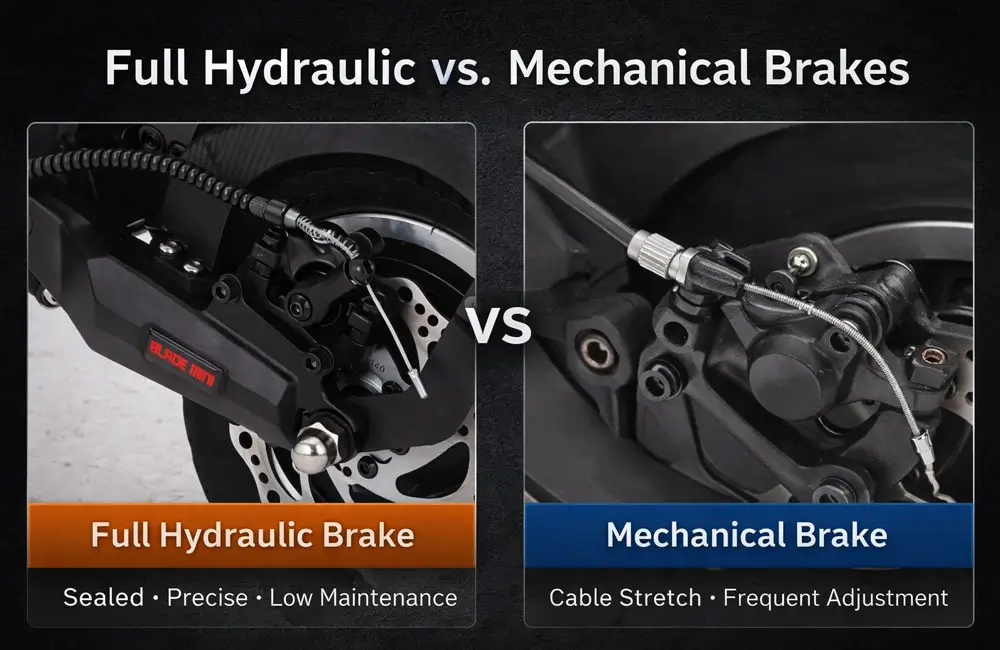
- Brake System: Don’t even consider a high-power scooter without robust brakes. Hydraulic brakes, which use fluid to transfer force, offer superior stopping power and a smoother, more responsive feel than mechanical disc or drum brakes. This is a non-negotiable safety feature.
- Suspension System: To handle uneven terrain and high-speed bumps, a good suspension system is vital. Look for scooters with hydraulic or adjustable spring suspension both in the front and rear. This not only absorbs shock but also improves handling and stability.
- Steering Damper: At speeds over 40 mph, a scooter’s handlebars can become unstable, a phenomenon known as “speed wobble.” A steering damper, or stabilizer, is an essential safety feature that adds resistance to the handlebars, preventing this dangerous wobble and giving you more control.
- Tires: The right tires are your only contact with the road. Pneumatic (air-filled) tires are standard on most high-power scooters, providing better shock absorption. For off-road models, look for wider, knobby tires that offer superior grip on loose surfaces.
5. The Buyer’s Guide: How to Choose Your High-Power Scooter
Choosing the right scooter is about matching your needs to the right machine.
- Define Your Use Case: Are you a commuter who needs to tackle massive hills? An adrenaline junkie seeking top speeds? An off-road enthusiast looking for a rugged machine? Your use case will determine your priorities.
- Set a Realistic Budget: High-power scooters are a significant investment. Expect to pay anywhere from $1,500 to over $4,000 for a quality model. This price reflects the cost of premium materials, advanced technology, and superior safety features.
- Consider Portability: High-power scooters are heavy, often weighing over 80 lbs (36 kg). If you need to carry it up stairs or into an office, consider its folded dimensions and weight. Some models offer a folding mechanism, but they are still not as light as a standard commuter scooter.
- Research Brand Reputation and After-Sales Support: A powerful scooter is a complex piece of machinery. You want to buy from a reputable brand like Teverun that offers reliable customer service, accessible replacement parts, and a solid warranty. A well-known brand gives you peace of mind that your investment is protected.
6. High-Power vs. Standard Scooters: Is the Upgrade Worth It?
This is the ultimate question. The answer depends on what you want from your ride. A report from Grand View Research highlights the global electric scooter market’s rapid growth and increasing demand for high-performance models, suggesting this is a worthwhile and future-proof investment for enthusiasts.
- For the Casual Commuter: If your commute is short, flat, and doesn’t involve heavy traffic, a standard scooter might be sufficient.
- For the Performance-Oriented Rider: If you face hills, want to ride for longer distances, or simply crave the feeling of raw power and speed, the upgrade to a high-power scooter is absolutely worth it. The difference in performance, safety, and build quality is immediately noticeable and provides a far more enjoyable and capable riding experience.
7. Conclusion: The Power and the Thrill
High-power electric scooters represent the pinnacle of personal electric mobility. They are not just toys; they are sophisticated vehicles that offer unmatched performance, versatility, and fun. By understanding the core technology and key features, you can make an informed decision and find a scooter that not only meets your needs but exceeds your expectations.
If you’re ready to experience the next level of electric mobility, a high-power scooter is waiting for you. Dive into our product lineup to explore models like the Teverun Fighter series, and discover why we are a leader in the high-performance market.