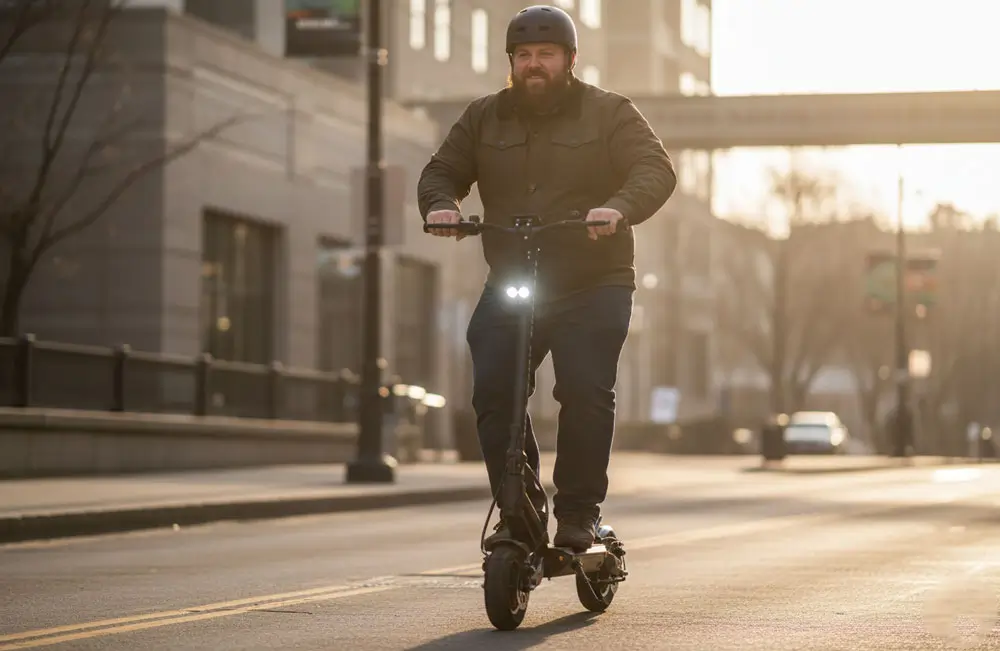
For an off-road enthusiast, the suspension system is the bridge between raw motor power and actual control. When you are traversing gravel paths, forest trails, or tackling a 40° incline, your suspension is working at its thermal and mechanical limits. In the high-performance electric scooter market of 2026, the debate has shifted from “do you need suspension” to “which technology allows you to master the terrain.”
As a brand that pioneers high-performance mobility, TEVERUN offers both technologies across its lineup—from the urban-agile BLADE GT II to the world-dominating FIGHTER SUPREME 7260R. Here is the deep dive into the physics, durability, and real-world performance of these two systems.
1. Spring Suspension: The Bedrock of Mechanical Reliability
Spring suspension is the classic choice for many mid-range and specialized e-scooters. It relies on a mechanical steel coil to absorb impacts. In the TEVERUN family, you will find this reliable setup on models like the BLADE GT II (the “Wolf in a Suit”) and the specialized all-terrain TETRA.
The Physics of the Coil
The spring works by storing kinetic energy when compressed and releasing it as it returns to its original shape. It is a linear system: the more force you apply, the more it compresses. This makes it exceptionally predictable. For models like the TEVERUN TETRA, which is designed as a “multi-functional all-terrain vehicle” to conquer deserts and hills, the ruggedness of a high-tensile spring is vital for handling high-torque 40° climbs without the complexity of fluid seals.
Pros for the Urban and Light Off-Road Rider:
- Low Maintenance: Steel springs are virtually immune to the environment. They don’t leak, they don’t require air pressure checks, and they perform consistently in extreme cold or heat.
- Cost-Effectiveness: It allows for high-performance motor specs (like the Blade GT II’s power) to remain accessible while providing adequate comfort on mixed city/trail surfaces.
The Off-Road Limit:
The Achilles’ heel of a pure spring setup is the lack of “damping.” Without a medium to slow down the spring’s return, you get a “pogo stick” effect. On continuous, high-speed bumps, the scooter can become bouncy, causing the tires to lose micro-seconds of contact with the ground, which can lead to steering instability at high speeds.
2. Hydraulic Suspension: The KKE™ Precision Engineering
For serious off-roaders and speed seekers, hydraulic suspension—specifically the KKE™ Adjustable Hydraulic Suspension found on the FIGHTER SUPREME ULTRA and FIGHTER 11+—is a paradigm shift. This system uses oil flow through precision valves to dissipate energy.

Why it Dominates the Dirt (Technical Data):
- 15 Levels of Damping Adjustment: This is a game-changer. The KKE™ system allows you to fine-tune the “rebound” speed. If you are a heavier rider or hitting a jumpy forest trail, you can stiffen the damping. If you are cruising, you can soften it. It supports riders of all weights and preferences. For heavy riders over 250 lbs, the choice between hydraulic and spring becomes even more critical to avoid bottoming out.
- 85% Shock Absorption: TEVERUN’s KKE™ units are engineered to neutralize up to 85% of vertical road shock. This doesn’t just feel better; it prevents the vibration from reaching the battery and controller, protecting your electronics.
- 40% Faster Shock Response: In extreme terrain, the hydraulic fluid reacts almost instantly to surface changes. This ensures the tires stay “glued” to the dirt, providing the traction needed for 15,000W peak power bursts on the SUPREME 7260R.
- Heat Dissipation: Premium hydraulic systems are built with durable materials that withstand heavy use. They dissipate the thermal energy generated by friction during rapid compression, preventing “shock fade” during long, aggressive rides.
3. Head-to-Head: Which One Wins the Off-Road?
In the TEVERUN lab, we don’t just guess; we test. We have tested our dual-damper systems over 100 times at extreme speeds (110–120 km/h) to ensure frame stability.
Comfort vs. Control
Hydraulic suspension (like on the FIGHTER MINI PRO) delivers a “smooth, stable experience” that essentially mimics a high-end mountain bike or a motorcycle. It reduces rider fatigue significantly. After an hour of off-roading, a rider on a hydraulic system will feel much fresher than one on a spring system, who has had to use their knees and ankles to compensate for the “bounce.”
Durability and Longevity
While springs are simpler, TEVERUN’s KKE™ hydraulic systems offer 2x longer life compared to basic industry-standard shocks. They are built for the “Daily Workhorse” grind, ensuring that the performance you feel on day one is the same performance you feel after 2,000 kilometers .While more advanced, hydraulic systems are part of the real cost of maintaining a high-end scooter, offering better long-term reliability.
4. Making Your Choice: The TEVERUN Decision Matrix
Choose KKE™ Hydraulic (FIGHTER SUPREME 7260R / ULTRA / 11+ / MINI PRO) if:
- You plan on riding at speeds above 50 km/h frequently.
- Your off-road trails are aggressive (roots, rocks, drop-offs).
- You want the absolute pinnacle of safety and vehicle control.
- You want to customize your ride feel to match your weight perfectly.
Choose Spring Suspension (BLADE GT II / TETRA / FIGHTER Q) if:
- You want the most “rugged” and low-maintenance setup possible.
- You primarily ride on paved roads with occasional forays into gravel or grass.
- You are looking for the best price-to-performance ratio.
- You need a specialized vehicle like the TETRA for heavy-duty all-terrain utility.
Conclusion: Engineering the Perfect Ride
The suspension is the “soul” of an electric scooter’s handling. At TEVERUN, we prioritize the “Stability You Can Rely On.” Whether it’s the 13-inch CST™ tubeless tires of the 7260R paired with hydraulic precision, or the multi-link spring system of the TETRA, we ensure every component is optimized for its mission.
Don’t settle for a bumpy ride. Choose the technology that matches your ambition and master the city—or the mountain—with TEVERUN.