1. Introduction: The Need for Speed vs. The Rule of Law
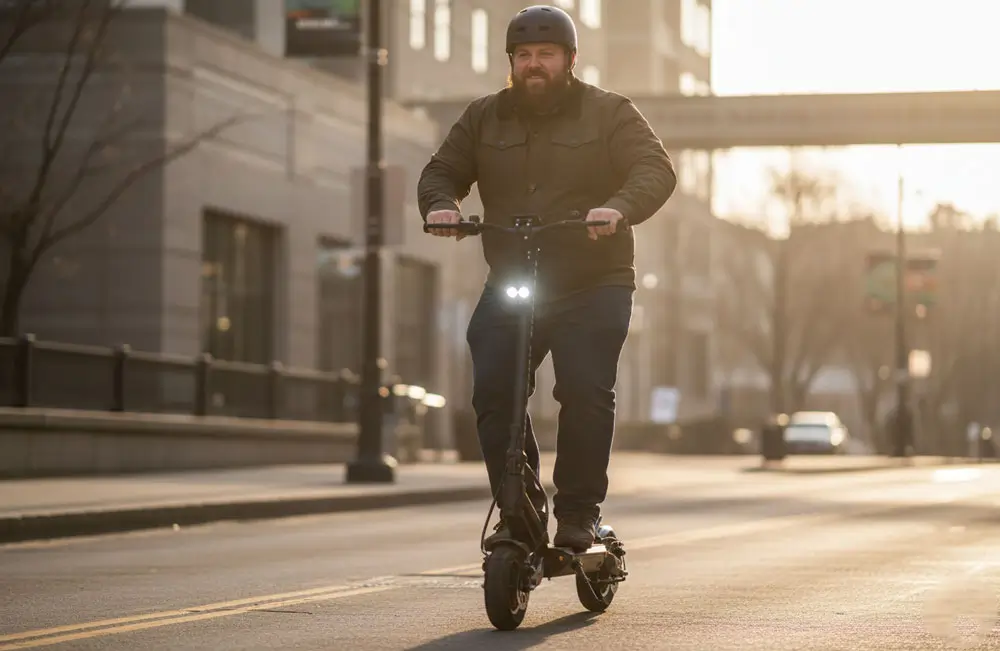
The electric scooter market has evolved to a point where machines capable of incredible speeds are readily available. Advertisements boast of top speeds of 100 km/h (60 mph) or more, promising a ride that can keep up with urban traffic and deliver a thrilling, high-performance experience. But with such power, a critical question immediately arises: Is it even legal to ride a 100 km/h electric scooter on public roads?
The short, direct answer is: in most of the United States and Europe, a scooter with a top speed of 100 km/h is not street legal in its full-power mode.
The reality is that while these scooters are sold legally, their use on public roads is often restricted or outright prohibited. This guide will explain why, delving into the specific legal classifications that govern these machines and outlining what owners need to know to stay compliant.
Important Disclaimer: This article is for informational purposes only and does not constitute legal advice. Laws are subject to change and vary by location. It is your sole responsibility to check and comply with all federal, state, and local laws before riding.
For a more general overview of scooter laws, see our comprehensive guide on High-Speed Scooter Laws: US & Europe Guide.
2. The US Legal Framework: A State-by-State Patchwork
In the United States, there is no single federal law that defines the legality of electric scooters. Instead, each state, and sometimes each city, sets its own rules. The vast majority of states use a classification system that limits what a street-legal scooter can be.
Common Speed & Power Limits
Most states classify an electric scooter as a “low-speed motorized scooter.” To qualify, the scooter must adhere to specific limits, most commonly:
- Speed Limit: A top speed of 20 mph (32 km/h) or sometimes up to 25 mph (40 km/h).
- Motor Power: A motor wattage limit, often around 750W or 1000W.
A scooter with a top speed of 100 km/h (60 mph) instantly fails these tests. It is no longer classified as a simple scooter. It may instead be reclassified as a:
- Moped: Requiring registration, a license plate, and a driver’s license.
- Motorcycle: Requiring a full motorcycle license and registration.
- Non-Street-Legal Vehicle: Prohibited from being ridden on public roads entirely.
For example, the National Highway Traffic Safety Administration (NHTSA) provides guidelines for electric vehicles that emphasize states’ authority to regulate these vehicles based on performance characteristics like speed and power.
3. The EU Legal Framework: Harmonized but Still Varied
The European Union has a more harmonized approach, with most countries adopting a similar framework based on “Personal Light Electric Vehicles” (PLEVs).
The 25 km/h Standard
The standard legal limit for an e-scooter in most of the EU is 25 km/h (15.5 mph).
- A scooter that can go faster than this is often moved into a different vehicle category, such as L1e-A, which covers light motorized vehicles.
- Moving into this category typically requires the vehicle to be certified, registered, and insured. The rider may also need a driver’s license.
Some countries, such as Germany, have even stricter rules, with a maximum legal speed of just 20 km/h. Meanwhile, countries like the UK have some of the most restrictive laws, where privately owned scooters are not allowed on public roads at all, regardless of speed.
A summary from the European Commission on urban mobility highlights the need for consistent rules, but also acknowledges that individual nations have the final say on specifics.
4. So, How Are 100 km/h Scooters Sold?
This is a common point of confusion. If these scooters are not street legal, why are they available for purchase from major retailers?
The answer is that they are sold as a “for private use” or “off-road” vehicle. Manufacturers and retailers explicitly state that these scooters are intended for use on private property only (e.g., race tracks, closed courses, private land).
Most high-end scooters, like those from Teverun, also come with a “legal mode” or “Eco mode” that electronically limits the top speed to comply with local laws. This allows owners to legally ride the scooter on public roads when the mode is active, while still having the full-power capability available for off-road or track use.
This feature is a testament to manufacturers’ commitment to safety and compliance, but it puts the responsibility squarely on the rider to use the scooter responsibly and in accordance with the law.
5. Beyond Legality: The Critical Safety Factor
The laws on high-speed scooters are not arbitrary—they are in place to protect riders and pedestrians. Riding a 100 km/h scooter on a public street or bike lane is incredibly dangerous, not just because of the speed, but because of the scooter’s physical characteristics.
- Braking Distance: A scooter’s braking distance at high speeds is significantly longer, making it difficult to stop in time to avoid an obstacle or collision.
- Ride Quality: The stability of a scooter at high speeds is far less than that of a motorcycle or car. Unexpected bumps, debris, or a sudden gust of wind can cause a loss of control.
- The Power-to-Weight Ratio: A scooter’s immense power in a relatively lightweight and compact package can make it difficult to handle without a high level of riding skill.
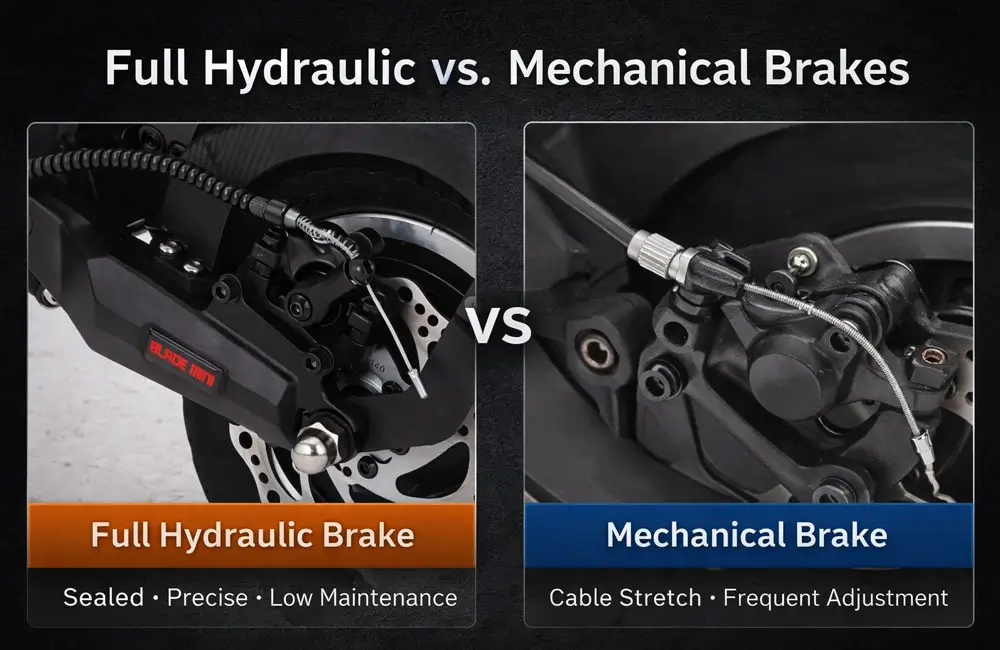
For these reasons, high-performance scooters are equipped with specialized features like hydraulic brakes and advanced suspension, which are necessary for safe operation. For a detailed guide on these components, see our Off-Road E-Scooter Buyer’s Guide: Tires & Suspension.
6. Conclusion: The Power and the Responsibility
A scooter with a top speed of 100 km/h is a powerful, thrilling machine, but it is not a street-legal toy. Its design and capabilities push it into a vehicle class that requires compliance with regulations for motorcycles or mopeds.
The key takeaway is this: A powerful scooter is a fantastic tool for enthusiasts, but it must be used responsibly. Always use your scooter’s “legal mode” on public roads, and reserve its full power for private property. By doing your research, you protect yourself and others from harm and ensure you can enjoy your ride without facing legal trouble.